Michael Gruenbaum was a boy imprisoned in the Nazi ghetto at Terezín when he sang in the chorus of Brundibár. Nearly eight decades later, he recorded his testimony for a performance in Zagreb in November 2022. Audiences will hear his account again on Monday, before each performance by the Zvjezdice Children’s Opera Choir.
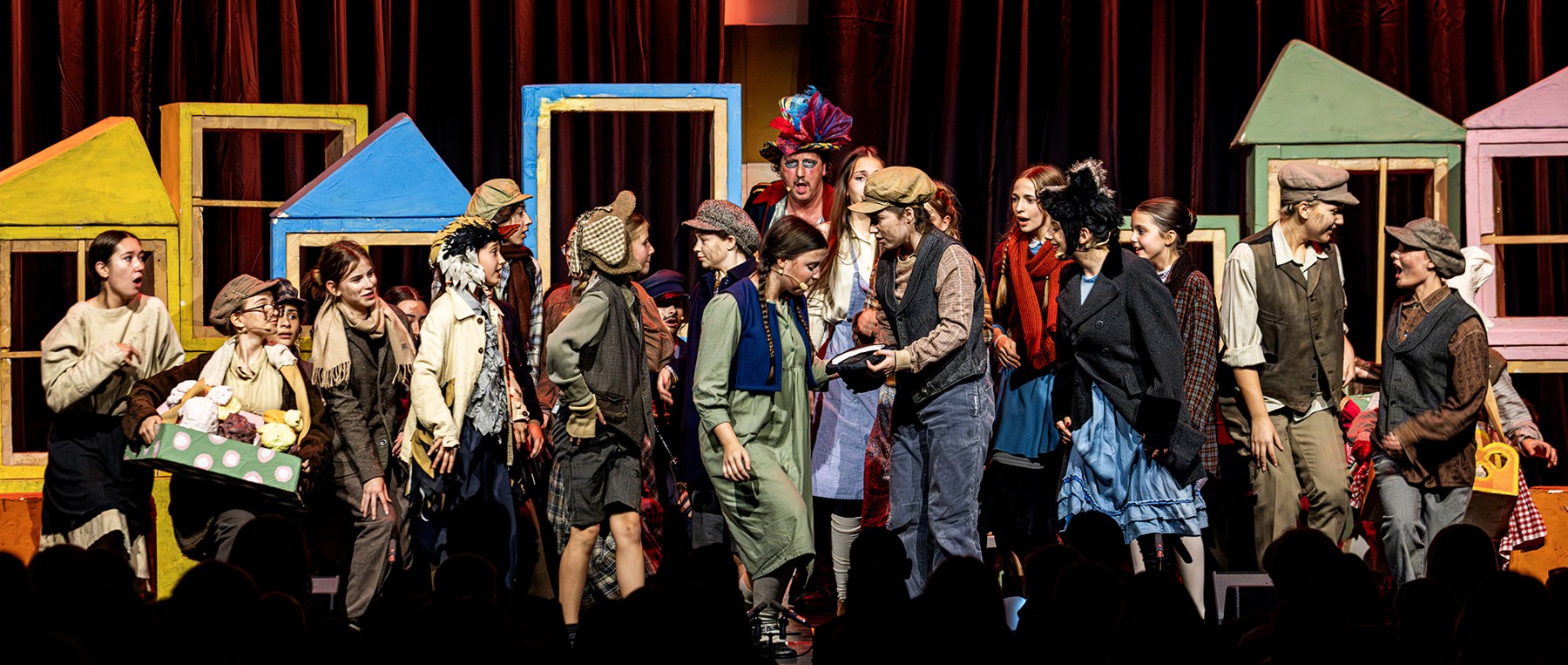
The opera follows Anuška and Jožica, a sister and brother who go to the market to buy milk for their sick mother. They have no money, but when they see passers-by giving coins to Brundibár, the organ-grinder, they try singing to earn a little themselves. Brundibár drives them away. A sparrow, a cat and a dog come to their aid, and the other children join them.
Hans Krása composed Brundibár in 1938 to a libretto by Adolf Hoffmeister. On 23 September 1943, Jewish children imprisoned at Terezín gave the first performance there, singing for their fellow prisoners. The opera was performed 55 times in the ghetto. In the autumn of 1944, the Nazis deported Krása and many of the young performers to Auschwitz, where they were murdered.
‘Every new generation should hear this music and learn what happened to the children who sang it,’ says Nataša Popović, director of the Centre for the Promotion of Tolerance and Holocaust Remembrance. The Croatian production, which she initiated in 2018, was one of the last projects of Branko Lustig, a co-founder of the Festival of Tolerance who survived the Holocaust as a child.
Krešimir Dolenčić and Kristina Grubiša direct the Zagreb production, with baritone Božidar Peričić in the title role and actor Zoran Pribičević appearing alongside the choir. Dijana Rogulja Deltin conducts the choir. Zdravko Šljivac is artistic director of the Zvjezdice vocal studio.
Admission is free. To confirm attendance at the 5pm performance, please email info@centartolerancije.hr.
Zvonimir Hall, Trg kralja Petra Krešimira IV. 1, Zagreb. Entrance at Stančićeva 4.
The Centre for the Promotion of Tolerance and Holocaust Remembrance and the Jewish Film Festival Zagreb Association organise the performances in partnership with Jadran film, with financial support from the City of Zagreb, the Croatian Ministry of Culture and Media, and JANAF.